
Golf Communities, Near Port Charlotte
Sixteen semi-private courses sit inside Charlotte County alone, and two local tracks landed on Florida’s 2026 top-25 public list. But the course is rarely what decides the purchase — the membership model is. Here’s how the local communities actually differ, and what each one commits you to every month.
Three Ways to Own Golf, and Only One of Them Is Optional
Bundled golf means the membership is deeded to the property and its cost is built into your mandatory fees. You pay it whether you play a hundred rounds a year or none. Heritage Landing and Babcock National are the clearest local examples. The upside is real — the per-round cost for an active golfer is unbeatable, and the fee is predictable. The downside is equally real: you cannot opt out, and you cannot sell the golf separately from the house.
Optional membership means you live on or near the course and decide separately whether to join. Rotonda West is the model here — 99 holes across five courses, and you can own a home on a fairway and never pay a golf dollar. This is the most flexible structure and generally the friendliest to a buyer who isn’t certain how much they’ll actually play.
The course you’ll love is easy to find. The fee structure you’ll resent in year three is the part worth slowing down for.
Equity and private clubs — St. Andrews South and Twin Isles among them — involve a membership purchase separate from the home, often with an initiation cost, and sometimes with a waiting list. Membership may or may not transfer with a sale. These are clubs first and neighborhoods second, and buyers who want that distinction usually want it strongly.

Side by Side
The Comparison Table
Every golf community within about thirty minutes of Port Charlotte, sorted by what actually differs between them.
| COMMUNITY | AREA | GOLF | MEMBERSHIP MODEL | GATED | AGE RESTRICTED |
|---|---|---|---|---|---|
| Rotonda Golf & CC | Rotonda West | 99 holes / 5 courses | OPTIONAL | No | No |
| Riverwood | Port Charlotte | 18-hole championship | OPTIONAL | Yes | No |
| Heritage Landing | Punta Gorda | 18 holes — Gordon Lewis | BUNDLED | Yes | No |
| Babcock National | Babcock Ranch | 18 holes — Gordon Lewis | BUNDLED | Yes | No |
| St. Andrews South | Punta Gorda Isles | 18 holes | MEMBER-OWNED | No | No |
| Twin Isles CC | Burnt Store Isles | 18 holes | SEMI-PRIVATE CLUB | No | No |
| Kings Gate | Punta Gorda | Executive course | OPTIONAL | Yes | Yes — 55+ |
| Maple Leaf G&CC | Port Charlotte | Executive course | RESIDENT-OWNED | Yes | Yes — 55+ |
| Deep Creek | Punta Gorda | 18 holes, public | PAY AS YOU PLAY | No | No |
Membership structures, fees, and age restrictions change — sometimes mid-year, and sometimes only for new buyers. Treat this table as a starting map, not a contract. Kyle verifies the current documents for any community before you tour it.
Nine Places Worth Your Weekend
Ordered roughly from most flexible to most committed, because that’s the axis most buyers are actually shopping on.
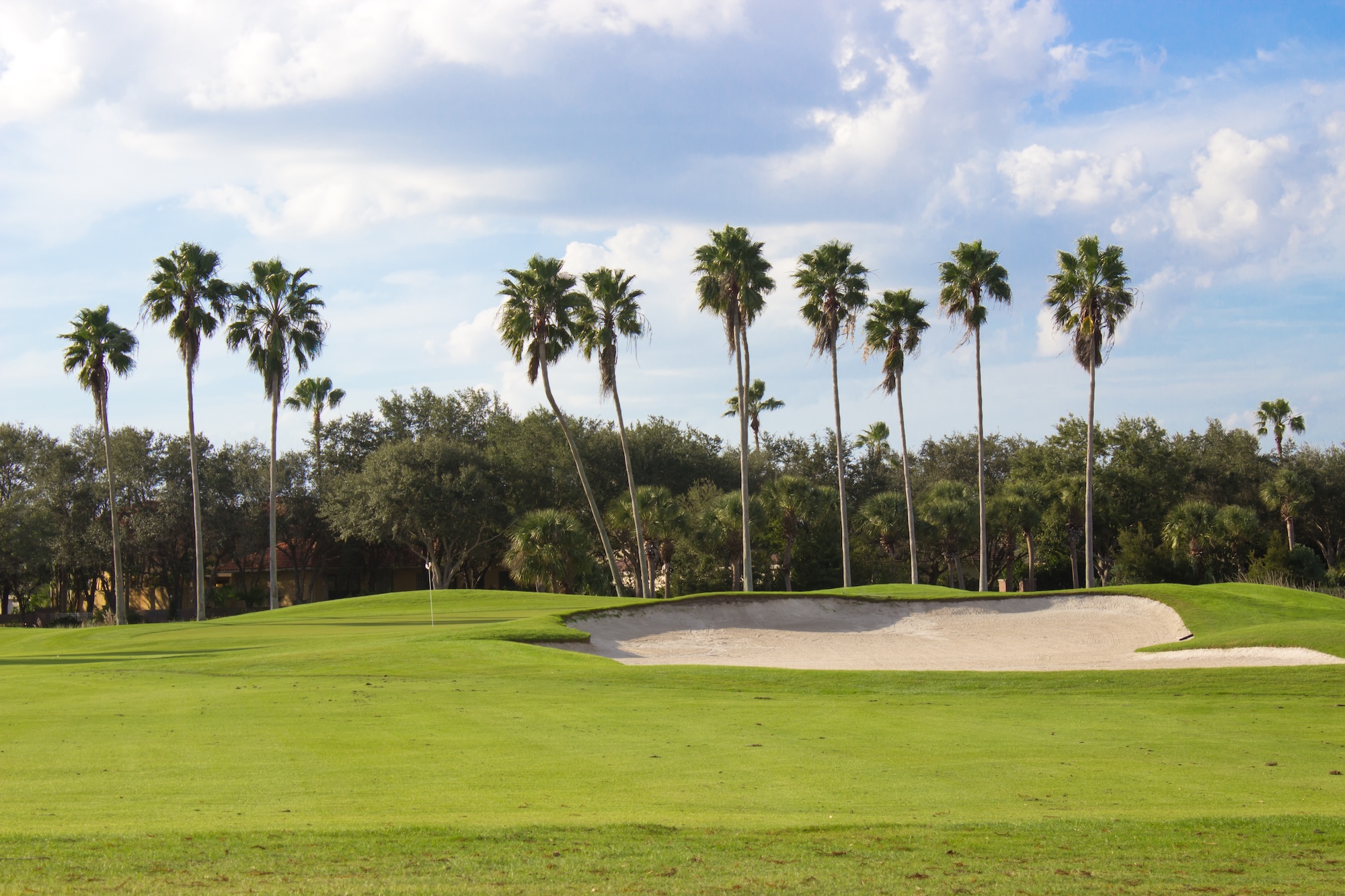
Rotonda Golf & Country Club
Ninety-nine holes across five courses — Long Marsh, The Palms, The Hills, Pinemoor, and The Links — under a single optional membership with no assessments and no food-and-beverage minimums. Certified beginner-friendly by the National Golf Course Owners Association. The most flexible golf ownership in the region.
ROTONDA WEST · NO OBLIGATION TO JOIN
Riverwood
Gated, heavily wooded, and built around an 18-hole championship course that landed #20 on the 2026 Golfers’ Choice list of Florida’s top public courses. Some homes carry a transferable beach club membership, which is a genuinely uncommon perk and worth asking about listing by listing.
PORT CHARLOTTE · GATED · BEACH CLUB
Deep Creek
A deed-restricted community wrapped around a public 18-hole course, with no membership requirement at all. Long the value play in the area — you get the fairway view and the walkable-to-the-first-tee convenience without any club obligation whatsoever. Ungated and unpretentious.
PUNTA GORDA · NO MEMBERSHIP REQUIRED
Heritage Landing Golf & CC
A Gordon Lewis course with resort-style amenities, gated, and offering deeded golf memberships attached to select homes. Note the distinction carefully: within Heritage Landing, some properties carry golf and some don’t, and two otherwise identical condos can have very different monthly obligations.
PUNTA GORDA · DEEDED MEMBERSHIPS
Babcock National
Another Gordon Lewis design, ranked #11 among Florida’s top public courses for 2026 — the highest-ranked course in this area. It sits inside Babcock Ranch, the master-planned solar town, which means a very different neighborhood context from anything else on this list. Bundled golf, gated, and still building.
BABCOCK RANCH · #11 IN FLORIDA
Kings Gate
A gated 55-and-over community built around an executive course — shorter, faster, and considerably easier on both the schedule and the body than a championship layout. Strong social calendar and a clubhouse culture that’s the actual draw for most buyers here.
PUNTA GORDA · AGE RESTRICTED · GATED
Maple Leaf Golf & CC
A resident-owned, gated 55+ community — meaning the residents collectively own the amenities rather than answering to an outside operator. That structure tends to produce lower costs and much stronger community involvement, and it’s a meaningfully different ownership experience from a developer-run club.
PORT CHARLOTTE · RESIDENT-OWNED
St. Andrews South Golf Club
A member-owned private club sitting inside Punta Gorda Isles, which makes it one of the few places locally where you can pair a sailboat-access canal home with a private club membership. Membership is purchased separately from the house — ask about availability early, because it isn’t always immediate.
PUNTA GORDA ISLES · MEMBER-OWNED
Twin Isles Country Club
The club anchoring Burnt Store Isles, semi-private and 18 holes. Pairs naturally with a BSI canal home for a buyer who wants both a boat and a club without leaving the neighborhood. Quieter and less resort-flavored than the newer bundled communities — which is precisely the appeal.
BURNT STORE ISLES · CLUB-FIRST
Due Diligence
Four Questions That Change the Math
What's the total monthly, not the HOA fee?
Golf communities frequently split costs across a master association, a sub-association, a club due, a cart fee, a food-and-beverage minimum, and a capital reserve. A listing quoting one number is quoting one line of several. I build the full monthly figure before we tour, because that number — not the price — is what determines whether a community is affordable for you.
Is there a capital or transfer fee at closing?
Many clubs charge a one-time capital contribution or transfer fee when a property changes hands — sometimes several thousand dollars, occasionally much more. It's disclosed in the association documents, not usually in the listing, and it belongs in your closing-cost estimate from day one rather than week three.
Can you actually get a tee time in season?
A bundled community with a high member-to-hole ratio can mean genuine difficulty booking January through March — the exact months you moved here to play. Ask about member counts, booking windows, and whether there's a cap. Then go play the course on a Saturday in season before you commit.
What's the assessment history and reserve position?
Courses need bunker work, irrigation replacement, and clubhouse roofs. Communities that have underfunded reserves pay for that through special assessments, which land on owners with little warning. The minutes and the reserve study tell you which kind of community you're buying into, and I read both.
Which Model Actually Fits You
Be honest about the middle two. Most buyers overestimate how much they’ll play in year two, and that single miscalculation is the most expensive one in this market.
Dues, cart fees, capital contributions, and transfer fees vary widely by community and change over time, so no honest page can list them as fixed figures. Ask Kyle for the current documents and a full monthly cost breakdown on any community you’re seriously considering — that comparison is free and it takes about a day.
Golf Community FAQs
Straight answers to what buyers ask most before touring homes here.
Bundled golf means the club membership is tied to the property itself and its cost sits inside your mandatory fees. You cannot opt out — that’s the defining feature, not a technicality. If you buy in a bundled community and stop playing entirely, you keep paying.
That structure is genuinely excellent for people who play often; the effective per-round cost is far below what public rates would total. It’s a poor fit for someone who thinks they might play occasionally. Be honest with yourself about which one you are, because it’s the difference between the best value on this page and a monthly bill you resent.
In optional, pay-as-you-play, and most private-club communities, no — you can own a home on the fairway and never touch a club. In bundled communities, you’ll pay the golf fee regardless of whether you play, so the honest answer there is that you’re paying for it either way. Match the model to how much you’ll actually use it.
It’s a one-time charge, usually paid by the buyer at closing, that funds the club’s long-term capital needs. It can run from a few hundred dollars to several thousand or more, and it’s spelled out in the association documents rather than the listing. Build it into your closing-cost estimate up front so it isn’t a surprise late in the deal.
It can be — you get the open view, the mature landscaping, and no back neighbor, often at a premium over an interior lot. Just weigh the premium against the reality that you’ll be looking at a golf course you don’t use, and check whether errant-ball liability or netting is an issue on that specific hole before you fall for the view.
Public courses (like Deep Creek) are open to anyone. Semi-private (Twin Isles) let the public book tee times while offering members priority and perks. Private clubs (St. Andrews South) require a membership to play at all. Which category a community falls into determines both your access and your cost structure, so it’s worth confirming before you tour.
Kings Gate and Maple Leaf are the 55-and-over communities on this list — meaning at least one resident must typically be 55 or older, with limits on younger occupants. Everything else is all-ages. If you’re under 55 or buying for the long term, confirm the specific community’s age policy in its governing documents before you commit.
Let's Find the Right Fee Structure First
Tell me your realistic rounds per month and your ceiling on total monthly carrying cost. I’ll come back with the two or three communities that actually fit — and the ones to skip, with the reason why.